
December 17, 2025
Burgundy Wine Region: A Guide to France’s Most Legendary Terroir
When wine lovers dream of France, they often picture Burgundy. This is where Pinot Noir and Chardonnay reach their highest expression, where centuries-old traditions meet meticulous craftsmanship, and where every vineyard tells a story written in limestone and clay. As a wine and food travel advisor with formal training through the Wine and Spirits Education Trust (WSET) Level 1 in Wines, I’ve spent hours studying this region’s extraordinary complexity.
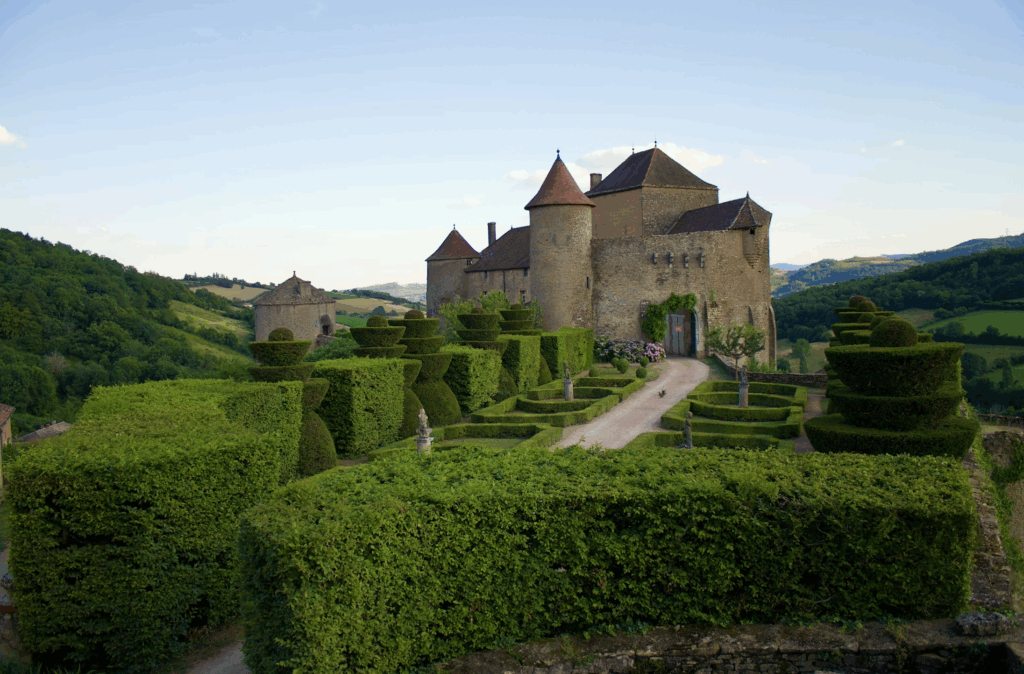
What makes Burgundy so captivating isn’t just the wine; it’s how deeply the culture, cuisine, and landscape are woven together into something greater than the sum of their parts.
If you’ve ever tasted a beautiful Burgundy and wondered what it would be like to stand in the vineyard where those grapes grew, to meet the winemaker who crafted that bottle, and to pair it with the region’s legendary cuisine in a centuries-old village, then this guide is for you. Burgundy isn’t just a wine region to visit; it’s a place to understand.
Understanding Burgundy’s Unique Terroir: The Climat System
What sets Burgundy apart from every other wine region in the world is its concept of climat, a UNESCO World Heritage designation that recognizes the region’s unique relationship between specific vineyard parcels and the wines they produce. A climat is a precisely defined vineyard plot with its own name, history, and distinctive characteristics shaped by geology, exposure, and centuries of winemaking tradition.
The Côte d’Or, Burgundy’s golden slope, is divided into more than 1,200 individual climats, each producing wines that taste distinctly different from the parcel next door. A Pinot Noir from Gevrey-Chambertin’s limestone-rich soils will show earthy, structured power, while one from Chambolle-Musigny’s clay and limestone blend expresses delicate, floral elegance.
This extreme specificity means that Burgundy’s classification system works differently than other regions. Here, the land matters more than the producer. A Grand Cru vineyard remains Grand Cru regardless of who farms it, though of course, skilled winemakers elevate great terroir to transcendent heights.
Understanding this system enhances every tasting experience. When you’re in Burgundy, you’re not just drinking Pinot Noir; you’re tasting Clos de Vougeot’s medieval history, Vosne-Romanée’s legendary elegance, or Pommard’s strong expressions. Each bottle is a liquid expression of a specific place.
The Major Sub-Regions: From Chablis to Mâconnais
Burgundy stretches nearly 150 miles from north to south, and while many people use “Burgundy” and “Côte d’Or” interchangeably, the region encompasses five distinct areas, each with its own character and specialties.
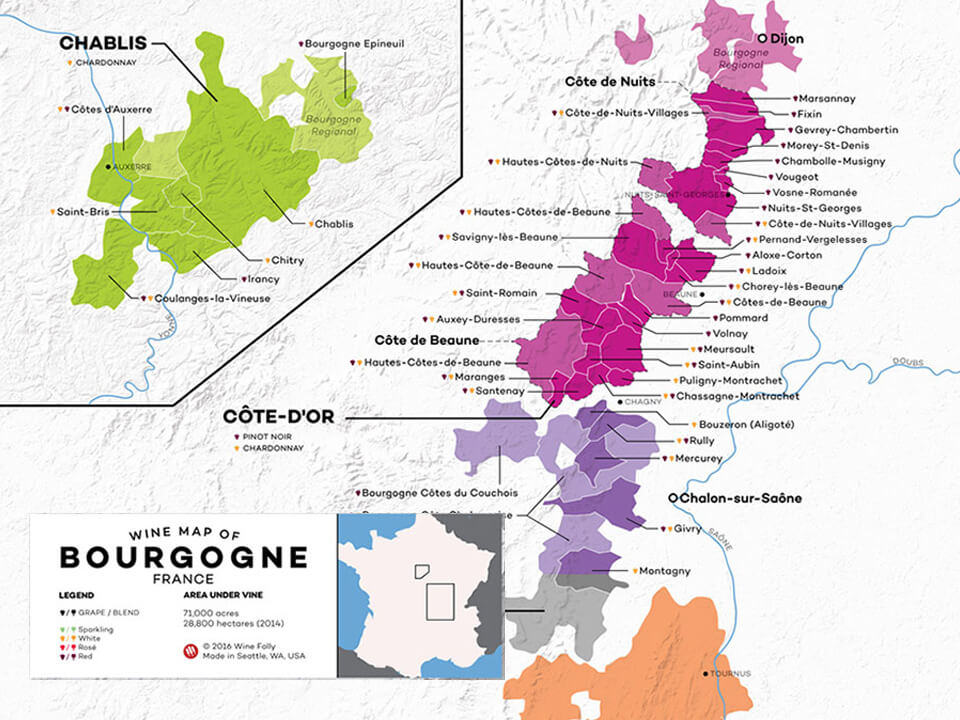
Chablis: The Northern Outpost
Situated 75 miles northwest of the main Burgundy region, Chablis stands alone geographically but remains firmly Burgundian in spirit. This cool-climate area produces some of the world’s most distinctive Chardonnay, wines that are poles apart from buttery California styles or rich white Burgundies from Meursault.
Chablis Chardonnay is defined by its steely minerality, bright acidity, and pure citrus fruit. The secret lies in the region’s unique Kimmeridgian limestone soil, formed 150 million years ago from fossilized oyster shells. Winemakers here typically avoid or minimize oak, allowing the terroir to speak clearly. The result is wine that tastes like liquid stone, with flavors of green apple, lemon zest, and wet river rocks.
The classification system ranges from basic Chablis to Premier Cru to Grand Cru, with the seven Grand Cru vineyards occupying a single hillside with perfect southwest exposure. These wines can age beautifully for decades, developing complex notes of honey, hazelnut, and mushroom while maintaining their characteristic mineral backbone.
Côte de Nuits: The Kingdom of Red Burgundy
The Côte de Nuits, stretching from Marsannay south to Corgoloin, is where Burgundy’s reputation for world-class Pinot Noir was built. This narrow strip of east-facing hillside contains 24 of Burgundy’s 33 red wine Grand Crus, including some of the most legendary names in wine.
The commune of Vosne-Romanée alone houses six Grand Crus, including the mythical Romanée-Conti, a 1.8-hectare monopole that produces fewer than 500 cases annually and consistently ranks among the world’s most expensive wines. Domaine de la Romanée-Conti, which owns this vineyard and produces wines from several other Grand Cru sites, is widely considered the pinnacle of Burgundy winemaking. The estate has been perfecting its craft since the 12th century and represents the absolute peak of what Pinot Noir can achieve.
Other legendary producers in Vosne-Romanée include Domaine Leroy, Domaine Georges Roumier in Chambolle-Musigny and Domaine Comte Liger-Belair represent the caliber of winemaking concentrated in this small area.
Gevrey-Chambertin, with nine Grand Crus, produces wines of power and structure.
Chambolle-Musigny offers the region’s most delicate, perfumed expressions. Each village has its own personality, and devoted Burgundy enthusiasts can spend lifetimes exploring the nuances.
Côte de Beaune: Where Chardonnay Shines
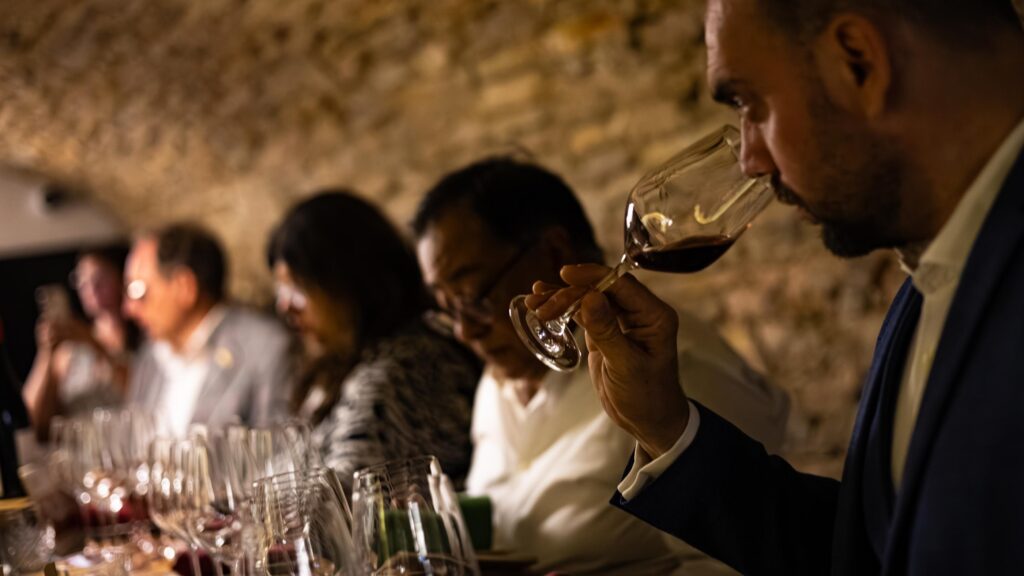
South of the Côte de Nuits, the Côte de Beaune produces both exceptional reds and some of the world’s greatest white wines. The town of Beaune itself serves as Burgundy’s wine capital, but it’s the surrounding villages that have made this area legendary for Chardonnay.
Meursault produces rich, buttery whites with notes of hazelnut and brioche. Puligny-Montrachet and Chassagne-Montrachet contain portions of the extraordinary Montrachet Grand Cru, widely considered the greatest dry white wine vineyard on earth. These wines combine power with elegance, richness with precision, and can age gracefully for decades.
The hillside commune of Pommard produces robust, age-worthy Pinot Noirs, while Volnay offers more elegant, perfumed reds. Corton, the only red Grand Cru in the Côte de Beaune, creates powerful wines from its privileged hillside position.
Côte Chalonnaise: Hidden Gems and Value
South of the Côte d’Or, the Côte Chalonnaise offers wines of genuine quality at more accessible prices. The region lacks Grand Crus but contains excellent Premier Cru vineyards producing wines that overdeliver on quality for their price point.
Mercurey specializes in structured reds, while Rully produces both elegant Pinot Noir and mineral-driven Chardonnay. Givry and Montagny round out the region, offering wines that express authentic Burgundian character without the stratospheric pricing of the Côte d’Or.
Mâconnais: Southern Burgundy’s Chardonnay Paradise
The southernmost region of Burgundy, the Mâconnais, is Chardonnay country. The most famous appellation, Pouilly-Fuissé, produces full-bodied whites that bridge the gap between northern Burgundy’s minerality and the richer, more fruit-forward styles of southern regions.
The rolling hills and slightly warmer climate create wines with ripe fruit character balanced by bright acidity. Saint-Véran and Viré-Clessé offer excellent values, while top Pouilly-Fuissé from premier sites rivals more expensive white Burgundies in complexity and aging potential.
Burgundy Wine and Food Pairings: Classic Combinations
Burgundian cuisine developed alongside its wines, and the region’s restaurants and home kitchens have spent centuries perfecting pairings that elevate both food and wine to something transcendent. The cooking style emphasizes rich sauces, butter, cream, and local ingredients prepared with care rather than showmanship.
Classic Burgundian Dishes
Boeuf Bourguignon
This remains the region’s most iconic dish. This slow-braised beef stew, made with red Burgundy, pearl onions, mushrooms, and lardons, creates a perfect marriage with medium-bodied Pinot Noir. The wine’s bright acidity cuts through the rich sauce, while the earthy mushroom and meat flavors mirror the wine’s forest floor and truffle notes. Pair it with a village-level wine from Gevrey-Chambertin or a Côte de Nuits-Villages for an authentic experience.
Coq au Vin
Chicken braised in red wine with mushrooms and onions showcases how Burgundian cooking uses wine as a building block of flavor rather than an afterthought. The dish pairs beautifully with the same wine used in cooking, typically a Côte de Beaune rouge or a lighter Pinot Noir from the Côte Chalonnaise.
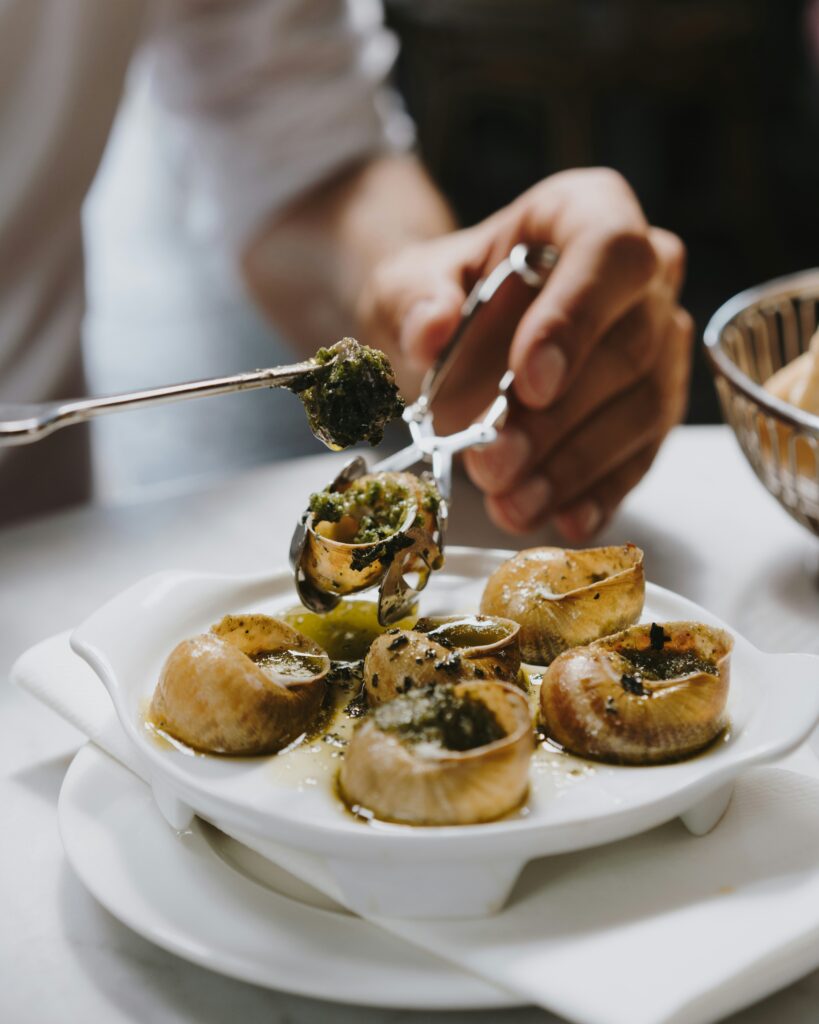
Escargots de Bourgogne
Those famous Burgundian snails baked in garlic, parsley, and copious amounts of butter, find their perfect match in Chablis. The wine’s bright acidity and mineral backbone cut through the butter’s richness while complementing the herbaceous garlic-parsley mixture. This is why Chablis developed the way it did; the cuisine demanded it.
Oeufs en Meurette
Poached eggs in a red wine sauce represents Burgundian cooking at its most elemental. The silky egg yolk combines with the wine-enriched sauce to create a texture that demands a wine with enough acidity to refresh the palate. A younger Pinot Noir from Mercury or a Côte de Beaune village wine provides the perfect balance.
Jambon Persillé
A terrine of ham studded with parsley and set in white wine gelée, is an Easter tradition in Burgundy but available year-round. This cold dish pairs wonderfully with Aligoté, Burgundy’s other white grape, which produces crisp, refreshing wines perfect for cutting through the richness of the ham and gelée.
Époisses Cheese
Arguably France’s most pungent cheese, Époisses is washed in Marc de Bourgogne (local brandy) and develops an intensely creamy, almost liquid interior. Despite its powerful aroma, Époisses pairs magnificently with Burgundian wines. Try it with a more mature red Burgundy from Gevrey-Chambertin or Pommard, where the wine’s developed tertiary aromas can stand up to the cheese’s intensity.
Pairing Principles for Burgundy
When pairing Burgundy wines with food, remember that these wines are defined by elegance rather than power, even when they come from prestigious Grand Cru vineyards. The best pairings emphasize balance and complementary flavors.
For red Burgundy, think earthy preparations: mushrooms, truffles, game birds, duck, and beef dishes with wine-based sauces. The wine’s savory qualities and silky tannins work beautifully with umami-rich ingredients. Avoid heavily spiced foods or aggressive flavors that would overwhelm the wine’s nuance.
For white Burgundy, consider the wine’s body and oak influence. Chablis and unoaked Mâconnais whites pair with lighter dishes like fish, shellfish, and goat cheese. Richer Meursault or Puligny-Montrachet can handle cream sauces, butter-poached lobster, or roasted chicken. The general principle is to match the wine’s weight with the dish’s richness.
History and Culture: Understanding Burgundy’s Soul
Burgundy’s wine history stretches back nearly two millennia, but the region’s modern identity was shaped primarily by Cistercian monks in the Middle Ages. In 1098, monks from the Abbey of Cîteaux began systematically studying which grape varieties grew best in which parcels, essentially inventing the concept of terroir that defines Burgundy today.
These monks were meticulous record-keepers who noticed that wines from specific vineyard plots consistently tasted different from their neighbors. Over centuries, they mapped Burgundy’s vineyards with remarkable precision, creating the foundation for the current climat system. The stone walls, called murgers, that they built to delineate individual vineyards still stand today, marking boundaries that have remained largely unchanged for 900 years.
The French Revolution
The Revolution dramatically altered Burgundy’s wine landscape. When church properties were seized and sold, the large monastic vineyard holdings were divided among multiple buyers. This fragmentation, combined with Napoleonic inheritance laws that required equal division of property among heirs, created Burgundy’s current situation where a single Grand Cru vineyard might have dozens of different owners, each farming a tiny parcel.
This explains why Burgundy labels seem so complicated compared to other regions. A bottle labeled “Chambertin Grand Cru” could come from any of approximately 25 different producers who own pieces of that vineyard, and quality varies significantly based on the producer’s skill and vineyard management approach.
Hospices de Beaune Wine Auction
This auction, established in 1859, became one of the world’s most famous wine events. Each November, wines donated to Beaune’s historic hospital are auctioned to raise funds for medical care and preservation. The auction prices establish market benchmarks for the vintage and draw buyers from around the world, making it vital for Burgundy’s commercial health.
Through world wars, phylloxera, and changing markets, Burgundy maintained its identity as a region where tradition matters and where understanding history is essential to understanding wine. Today’s winemakers in Vosne-Romanée or Meursault work in vineyards their ancestors farmed for generations, using methods refined over centuries while incorporating modern knowledge about viticulture and winemaking.
Art, Architecture, and Attractions Beyond the Cellar
While wine brings people to Burgundy, the region’s cultural richness ensures there’s much to experience beyond tasting rooms. This is a landscape shaped by history, where medieval towns, Romanesque churches, and Renaissance architecture create a backdrop as compelling as the wines themselves.
Hospices de Beaune
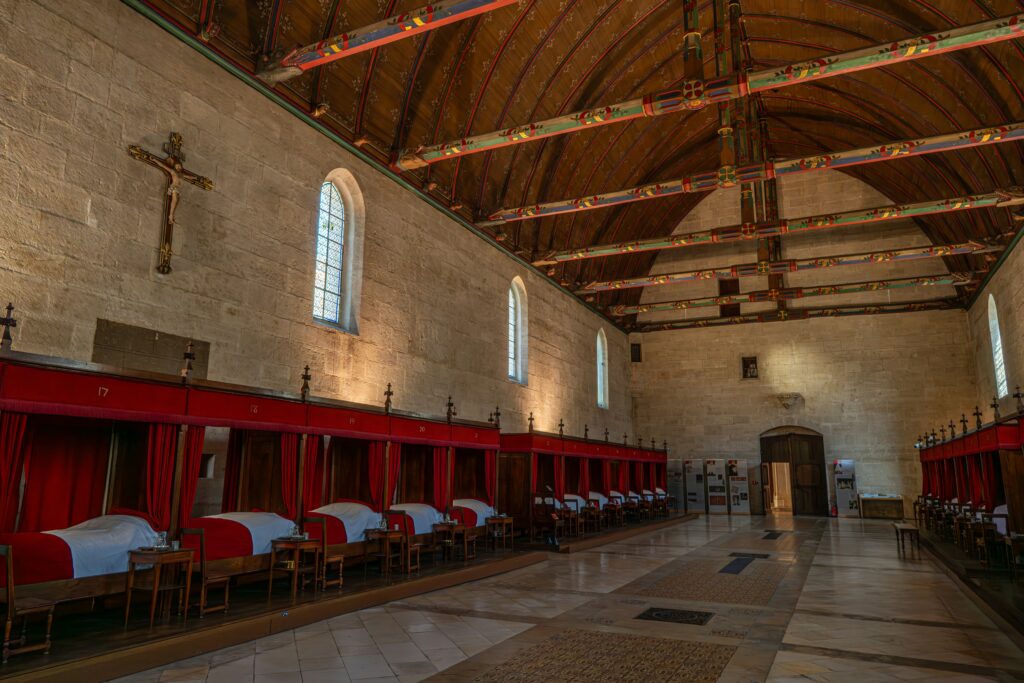
The Hospices de Beaune, also called Hôtel-Dieu, stands as Burgundy’s most iconic monument. Founded in 1443 by Nicolas Rolin, chancellor to the Duke of Burgundy, this medieval hospital served the sick and poor for more than five centuries. The building’s distinctive polychrome-tiled roof, geometric patterns in glazed terracotta, has become Burgundy’s most photographed landmark.
The Grand’Salle remains perfectly preserved with its remarkable timber-vaulted ceiling and rows of curtained beds where patients were cared for. The chapel houses Rogier van der Weyden’s stunning polyptych “The Last Judgment,” a masterwork of Flemish painting commissioned in 1443. The painting’s detail and emotional power justify a visit to Beaune on their own.
The Hospices’ wine auction each November transforms the building into the center of the wine world. Visitors during this period will experience Burgundy at its most vibrant, with wine events, tastings, and celebrations throughout the region.
Abbaye de Cluny
This was once the largest church in Christendom before St. Peter’s Basilica was built in Rome. Abbaye de Cluny wielded enormous religious and political power during the Middle Ages before the shift towards Rome. Though much of the abbey was destroyed during the French Revolution, what remains impresses with its scale and architectural innovation.
The abbey’s influence on Burgundy extended far beyond religion. Cluniac monks were instrumental in developing vineyard practices and winemaking techniques throughout the region. Seeing the remaining structures (with a bit of imagination) provides an understanding of how monastic orders shaped Burgundy’s wine culture.
When to Visit Burgundy
Burgundy rewards visits throughout the year, with each season offering distinct experiences. Understanding the rhythm of the wine year helps you choose the timing that matches your interests.
Spring (April-May)
Spring brings Burgundy’s vineyards to life as vines leaf out and the countryside turns lush green. Weather can be unpredictable, but you’ll encounter fewer tourists and witness the beginning of the growing season. This is an excellent time for serious wine enthusiasts interested in understanding viticulture. Winemakers have more time for in-depth conversations between the winter’s pruning and summer’s canopy management.
Summer (June-August)
Offering warm, long days perfect for exploring villages and dining on outdoor terraces, summer is a great time to visit. July and August can be crowded, particularly in Beaune, but the countryside remains relatively peaceful. The vines are at their most photogenic, loaded with developing clusters as véraison (the onset of ripening) begins in August.
Harvest (September-October)
This might seem like the obvious time to visit, but it’s actually the most challenging. Wineries are intensely focused on bringing in grapes and beginning fermentation, leaving little time for visitors. Having connections or working with a travel advisor, like Mistral Winds Travel, becomes essential for securing access.
Fall (Late October-November)
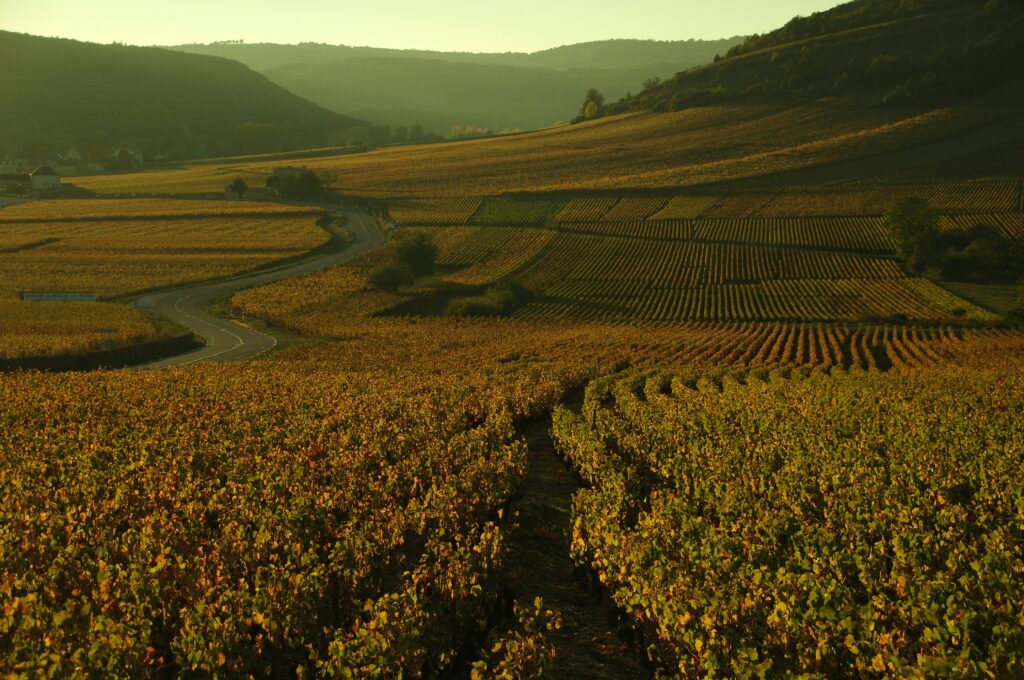
Autumn delivers Burgundy at its most beautiful. The vineyards blaze with autumn color, the harvest crush is complete, and winemakers can again welcome visitors. The Hospices de Beaune auction in mid-November makes this the region’s most exciting time, though hotel availability becomes scarce. The fall also showcases Burgundy’s culinary tradition, as restaurants feature game, truffles, and other seasonal specialties.
Winter (December-February)
The winter months might surprise you with its appeal. While cold, the season offers the intimacy of empty villages and the opportunity to taste the new vintage from barrel. Winemakers have time for longer, more detailed discussions about their wines and philosophy. If you’re a serious collector or industry professional, winter visits provide access and insights impossible during busier seasons.
Regardless of when you visit, I recommend starting to plan your Burgundy journey nine to twelve months in advance. The region’s top winemakers, especially those producing limited-quantity wines, often book visits months ahead. Premier restaurants, particularly those with Michelin stars, require early reservations. Historic hotels in villages like Beaune or Meursault fill quickly, especially during peak seasons.
That said, because of my connections and expertise, memorable Burgundy experiences can be arranged on shorter notice. This is thanks to my partners who can open doors that remain closed to independent travelers, regardless of lead time.
Why Work with a Wine and Food Travel Advisor for Burgundy
Burgundy presents unique challenges that make working with a specialized travel advisor especially valuable. Many legendary domaines only accept visitors by referral, requiring connections built through professional relationships.
Through my work and travel I’ve developed relationships with winemakers, sommeliers, and hospitality professionals throughout Burgundy. These connections offer private tastings at estates that don’t typically welcome visitors and access wines that never appear on export lists.
When you work with me you’re partnering with someone who has built relationships with the people who make Burgundy special. That human connection transforms a good wine trip into an extraordinary journey of discovery.
Begin Your Burgundy Journey
Burgundy represents the pinnacle of wine travel, where every element connects to create something greater than any single experience. From the Grand Crus of Vosne-Romanée to Chablis’s mineral-driven whites, those who take time to understand the complexity are rewarded.
Whether you’re a collector, a curious enthusiast, or someone who simply loves beautiful places and wine, Burgundy offers experiences you’ll remember for a lifetime.
Ready to plan your Burgundy wine journey? Contact me through my inquiry form to begin the conversation about where this legendary region will take you. We’ll schedule a video chat to discuss your preferences, style, and dreams. I’ll use that information to create a customized itinerary that connects you with Burgundy’s greatest winemakers, chefs, and landscapes. If you’d like to know more about the process of working together, download my “How it Works” guide.
Alternatively, subscribe to my weekly newsletter for insights into wine and culinary destinations delivered directly to your inbox.
Frequently Asked Questions About Burgundy Wine Region
What makes Burgundy wines different from other Pinot Noir and Chardonnay?
Burgundy wines are defined by their expression of terroir rather than winemaker intervention. The region’s climat system divides vineyards into more than 1,200 precisely defined parcels, each producing wines with distinct characteristics based on soil composition, elevation, and exposure.
When is the best time to visit Burgundy for wine tasting?
The ideal time depends on your priorities. Late October through November offers spectacular fall colors, completed harvests (so winemakers have time for visitors), and the famous Hospices de Beaune auction. Spring (April-May) provides fewer crowds and insights into vineyard management. Avoid late September through early October unless you have strong connections, as wineries are focused on harvest. Winter visits work well for serious enthusiasts seeking in-depth conversations with winemakers. Start planning nine to twelve months in advance for the best access to prestigious estates and restaurants.
How do I visit Domaine de la Romanée-Conti and other famous estates?
Most prestigious Burgundy estates like Domaine de la Romanée-Conti, Domaine Leroy, and Domaine Georges Roumier don’t accept public visitors and only open their doors to wine trade professionals, serious collectors with existing relationships, or visitors referred by trusted partners. Working with Mistral Winds Travel, who has established connections in Burgundy, is often the only way to arrange private visits to these legendary producers. Alternative approaches include attending professional wine events in the region or building relationships with importers who can facilitate introductions.
What is a Grand Cru in Burgundy and how does it compare to Premier Cru?
Burgundy’s classification system has four levels: Regional (basic Bourgogne), Village (named for specific communes like Gevrey-Chambertin), Premier Cru (exceptional vineyard sites within villages), and Grand Cru (the absolute finest vineyards). Only 33 of Burgundy’s 1,200+ climats are classified as Grand Cru, representing less than 2% of production. Grand Cru wines come from specific vineyards like Romanée-Conti or Montrachet that have proven capable of producing extraordinary wines for centuries. Premier Cru sites are excellent but lack the historical consistency or ideal terroir of Grand Crus. Quality differences can be subtle, but Grand Crus typically show greater depth, complexity, and aging potential.

My clients receive comprehensive destination guides, but I believe great travel inspiration should be shared with everyone. Here you'll find insider tips from my travels, wine region discoveries, and destination highlights that might just inspire your next adventure. Whether you're planning a honeymoon, anniversary trip, or culinary escape, let's explore the world together!
Welcome To My
Home On The Web
A cool, dry wind that flows through France's Rhone Valley towards the Mediterranean Sea. It naturally ventilates vineyards, creating the perfect conditions for exceptional French wines and regional gastronomy.
What is a Mistral Wind?


