
March 11, 2026
Lost Mountain Vineyards: A Refined Winery Experience in Delaplane, Virginia
The first thing you notice at Lost Mountain Vineyards is how peaceful it feels.
Tucked into the hills of Delaplane, Virginia, the estate sits quietly among rolling vineyards with the Blue Ridge Mountains rising in the distance. It’s the kind of place that immediately invites you to slow down, pour a glass of wine, settle into the view, and stay awhile.
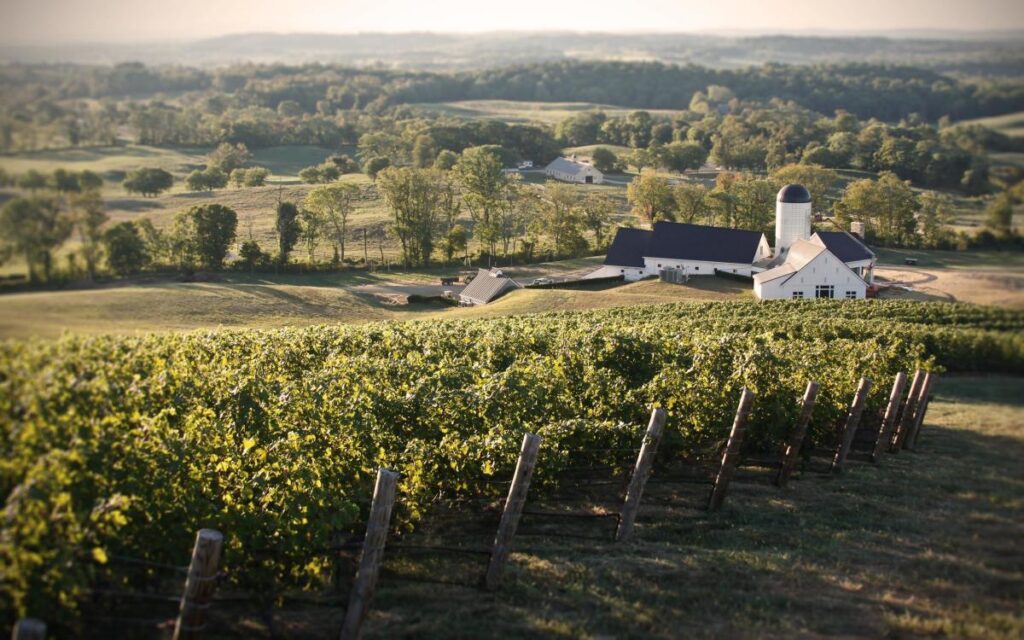
Just over an hour from Washington, DC, Lost Mountain offers a more refined take on the Northern Virginia winery experience. Rather than crowded tasting bars and weekend party scenes, the focus here is on thoughtfully made Bordeaux-style wines, genuine hospitality, and a setting designed for lingering conversations over a good glass.
If you’re exploring Virginia wine country, Lost Mountain Vineyards deserves a place on your itinerary.
Lost Mountain Vineyards: Quick Facts
- Location: Delaplane, Virginia (Fauquier County)
- Wine Region: Northern Virginia / Middleburg AVA area
- Distance from Washington, DC: Approximately 1 hour by car
- Wine Style: Bordeaux-inspired blends including Cabernet Sauvignon, Merlot, and Petit Verdot
- Tasting Experience: Seated tastings with vineyard and Blue Ridge Mountain views
- Reservations: Required in advance (book via Tock on the Lost Mountain website)
- Best Time to Visit: Spring through fall for vineyard views and outdoor seating
Discovering Lost Mountain Vineyards
Before visiting, I’d heard Lost Mountain described as one of the most thoughtfully designed wineries in Northern Virginia. After spending an afternoon there, it’s easy to understand why.
From the architecture and vineyard views to the wines being produced, Lost Mountain feels like it belongs to a new generation of Virginia wineries. A producer that prioritizes not only exceptional wine, but a beautifully curated experience that makes the visit itself worth the drive.
Where Lost Mountain Vineyards Is Located
If you’re traveling from Washington, DC, Lost Mountain is easily accessible via Route 66. Google Maps will take you directly there, but be sure to have a reservation before you arrive.
Lost Mountain is a private, gated property. You won’t be able to simply pop in without arrangements. Once you’re through the gate, the drive up to the winery sets the scene beautifully: neat rows of vines climb the hillside, rock outcroppings peek through the plantings, and the winery itself appears just ahead, somehow managing to feel both impressive and completely at home in the landscape.
The Vision Behind the Winery
Lost Mountain was originally established as RdV Vineyards by Rutger de Vink, who purchased the property in the early 2000s. From the start, de Vink set out to make world-class wine that rivaled his favorite Bordeaux blends, bringing in soil scientists, vineyard professionals, and oenologists from France to get it right.
The south-facing slope that makes up the majority of the vineyard is key to that vision. More sun exposure than most neighboring sites means better ripening conditions for Cabernet Sauvignon, which can be notoriously difficult in Virginia’s climate. The soils add another advantage: thin, nutrient-poor topsoil gives way to a granite base, forcing vines to work hard for every drop of water, which is exactly the kind of stress that concentrates flavor in the grape.
De Vink brought on winemaker Josh Grainer and released the 2008 vintage as RdV’s debut. In 2024, the property changed hands for the first time: the Bouygues family, brothers Martin and Olivier, who own two estates in Bordeaux, purchased the winery. This marked the first French family to own and operate a Virginia winery. They renamed it Lost Mountain, a name that fits both the land’s history and the European custom of naming a wine estate after its place rather than its founder.
The Setting: Virginia Wine Country at Its Best
If you’ve driven the Blue Ridge Parkway or hiked through the Shenandoah Valley, you already have a sense of the landscape that surrounds Lost Mountain. The winery sits just east of the Valley, off Route 66, with the mountains forming a backdrop that shifts beautifully through the seasons.
The property itself is a pleasure to move through. Neatly tended rows of vines, a thoughtfully designed outdoor patio, and the winery building that sits naturally in the landscape. Lost Mountain is right in the heart of Virginia’s horse country, surrounded by magnificent farms and fits in seamlessly, which is exactly the point.
Architecture and Design of the Tasting Room
Construction on the winery began in 2008, and de Vink’s intention was clear: build something that felt like it had always been there. Approaching the winery, you pass a red barn, then arrive at a structure centered on a silo and barn-style building that evoke an authentic sense of place without feeling contrived.
Inside, the tasting room is warm and considered: a stone hearth with a fireplace, natural wood beams and floors, and walls that are almost entirely glass, giving you an uninterrupted view of the vineyard from your seat. On warmer days, a beautiful patio extends the experience outdoors. It’s modern without being cold, rustic without being rough. It feels exactly right.
The Atmosphere: Elevated, but Never Stiff
Reservation-only access and limited daily tours might suggest a formal, buttoned-up environment. It’s anything but. From the moment you walk in, you’re welcomed warmly by your host and handed a complimentary glass of rosé (one that isn’t available for sale anywhere) and shown to a seat while you wait for the tour to begin.
The staff moves with a quiet purposefulness that feels genuinely unhurried. Doors are held, greetings are sincere, and there’s a cohesiveness to the whole team that’s hard to manufacture. During my visit, a few members arrived for their afternoon reservations and were greeted like old friends because, clearly, they were. Lost Mountain has the feeling of a place people return to.
The Wine at Lost Mountain Vineyards
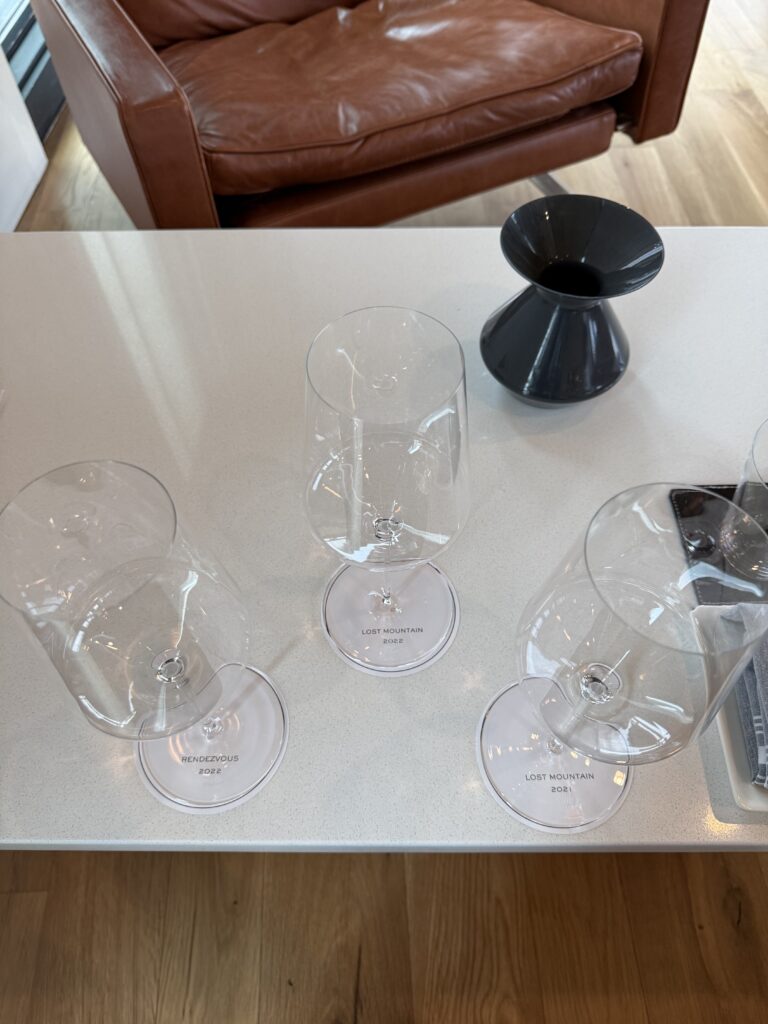
Lost Mountain produces three red wines, each with a distinct purpose and personality.
Friends & Family is the entry-level blend with minimal oak aging, meant to be enjoyed now rather than cellared. It’s approachable and easy drinking, a good introduction to the house style.
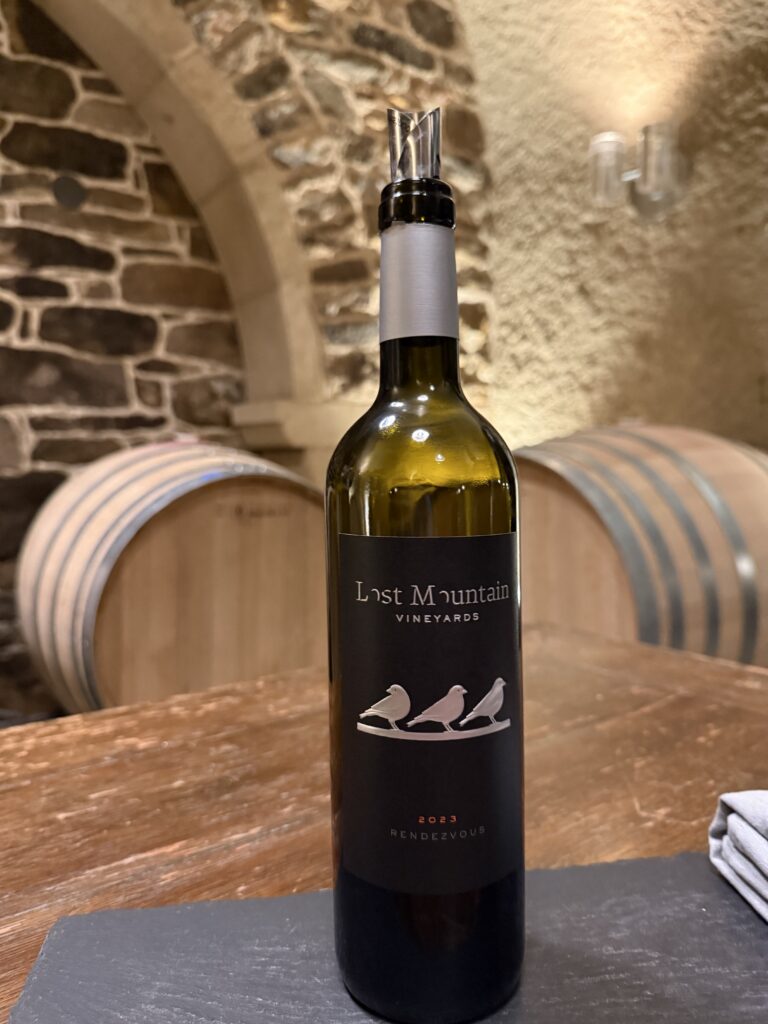
Rendezvous is the mid-tier wine, typically made in a Right Bank Bordeaux style with Merlot as the dominant variety. It sees time in oak before bottling and has real aging potential. This is a wine worth setting aside for a few years if you have the patience.
Lost Mountain, the flagship, is made only from the estate’s finest grapes and typically leads with Cabernet Sauvignon. It’s built to age 20, 25, even 30 years, on par with a high-quality Bordeaux. It’s the wine the whole estate is oriented around, and tasting it makes that clear.
How Virginia’s Terroir Shapes These Wines
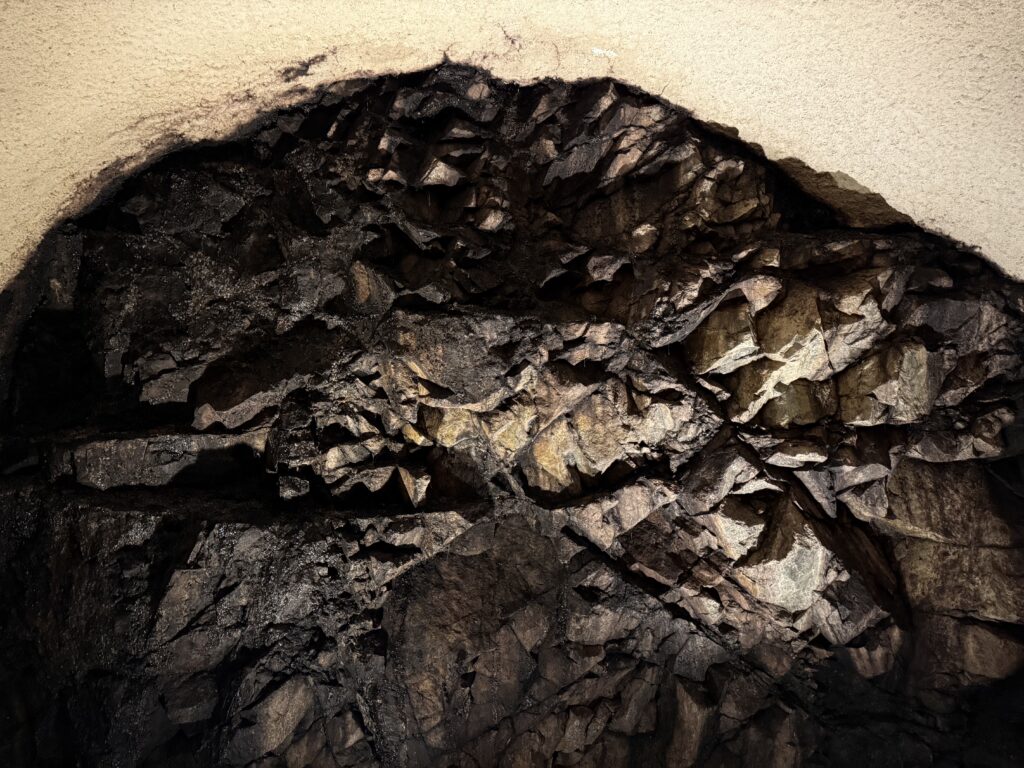
Virginia’s climate is humid and wet, which presents real challenges for viticulture. Lost Mountain’s geography helps address them. A nearly constant cool wind moves through the vineyard, thanks to the surrounding mountains. This helps to reduce the moisture on leaves and grapes that leads to rot and mildew.
Below the surface, that granite base does double duty: it drains excess water efficiently, and forces the vines’ roots to dig deep in search of hydration. Vines that have to work for their water put their energy into fewer, more concentrated grapes, and that’s exactly what you want in the glass.
The Story Behind the Name
The “Lost Mountain” is the official name of the hill on which the vineyard sits, and the story behind it is quietly wonderful. In the mid-1700s, George Washington worked as a land surveyor in the Winchester area and surveyed much of the surrounding land. Later, when searching for property to purchase, he commissioned a cartographer to draw up maps of the region. When the maps were delivered, Washington noticed topographic features from his surveys were missing. The corrected maps labeled the area “Lost Mountain” and the name has stayed ever since.
When the Bouygues family acquired the estate in 2024, renaming it Lost Mountain made natural sense. In Europe, it’s customary to name a wine estate after its place rather than its owner, as the land is what matters. That philosophy aligns perfectly with everything this winery stands for.
What to Expect During a Tasting
A tour and tasting at Lost Mountain is $120 per person and includes light bites alongside your wines. Reservations are made through Tock. You can find the link on the Lost Mountain website, and you’ll input a credit card to hold your spot. I made my reservation just two days before my visit without any trouble, though weekends and holidays book quickly.
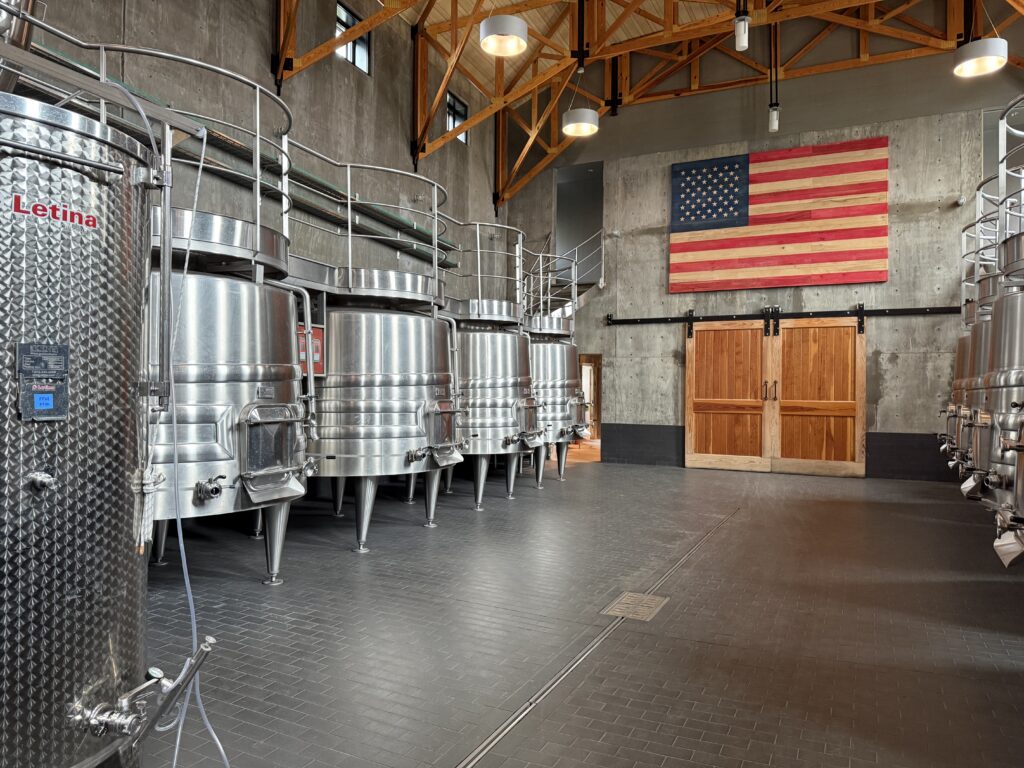
Once the group has gathered, your guide walks you through the property. On a nice day, you’ll head outside to see the vineyard; if the weather doesn’t cooperate, the tasting room’s glass walls keep the vineyard well in view. The tour moves through the history of the estate, into the immaculately clean tank room (where you’ll see an extracted granite core showing the layers of rock beneath the vineyard – it’s a genuinely fascinating piece), and down into the aging cellar.
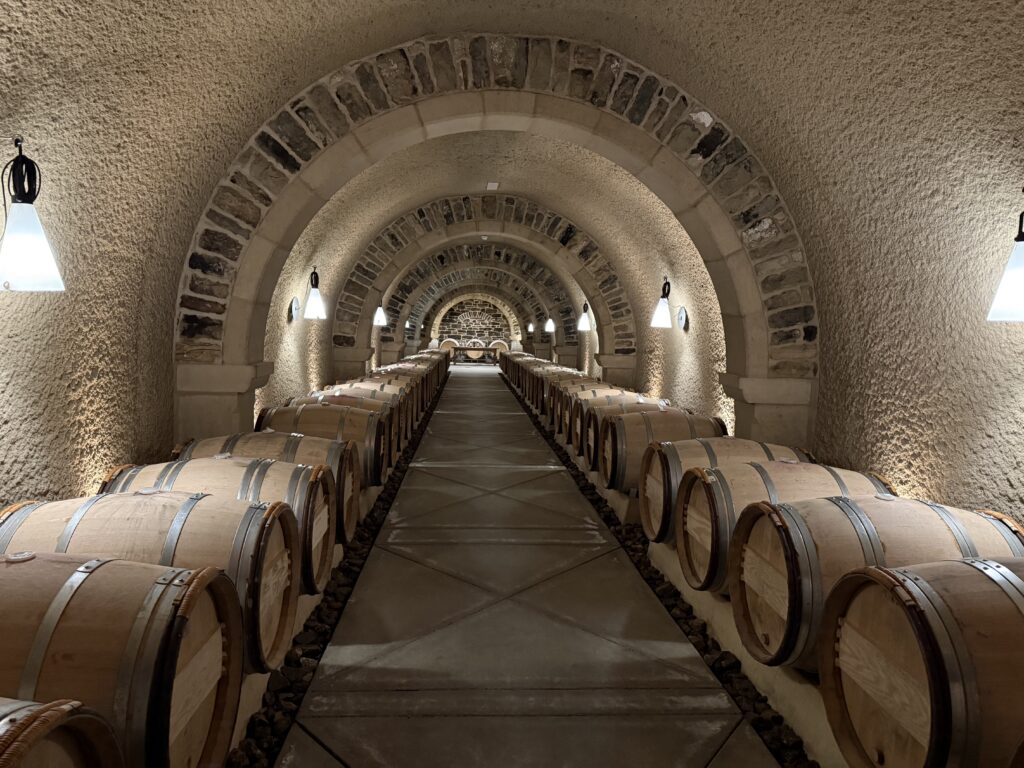
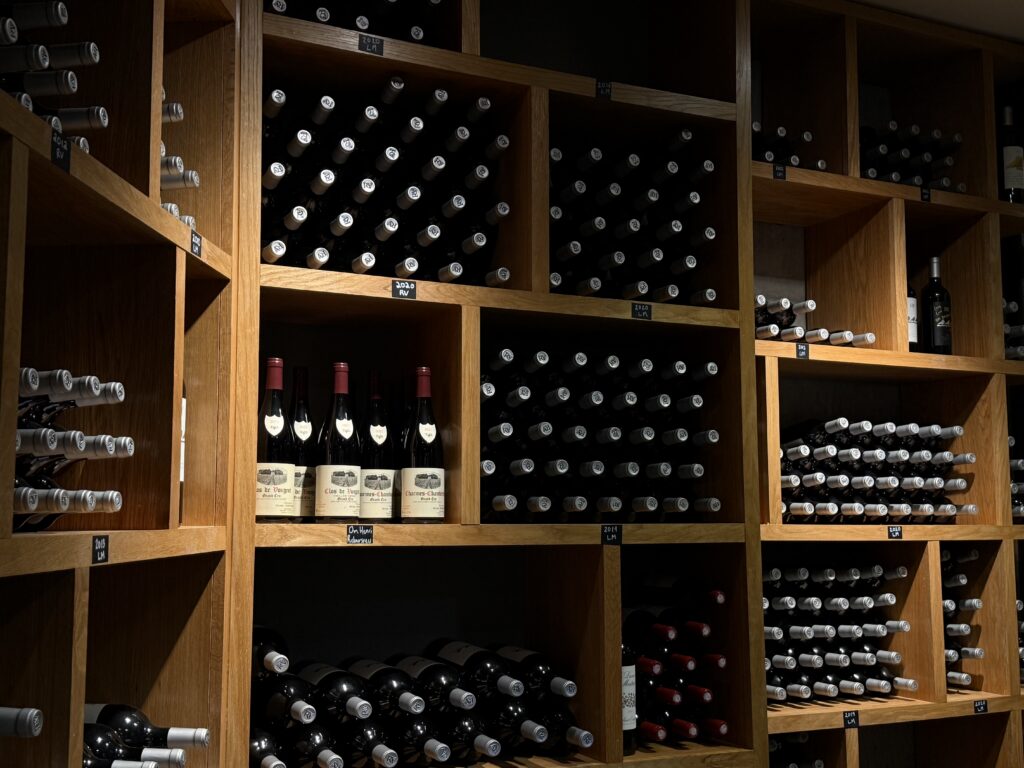
The cellar is beautiful. It’s barrel-lined, underground, and centered on an exposed granite wall where, at the right time of year, you can actually see water trickling down the stone. Your guide will walk you through what’s aging where, and likely pour you an extra glass while you’re down there. During my tour, we were treated to a 2023 Rendezvous not yet released. That alone was worth the visit.
Back in the tasting room, your wines and snacks are waiting. During my tasting I tried the 2022 and 2023 Rendezvous and the 2021 and 2022 Lost Mountain, tasting through the vintages side-by-side. Weather conditions, blending decisions, and the natural variability of each growing season mean these wines shift meaningfully year to year. The vintage comparison was one of the most interesting parts of the experience.
Food Pairings and Light Bites
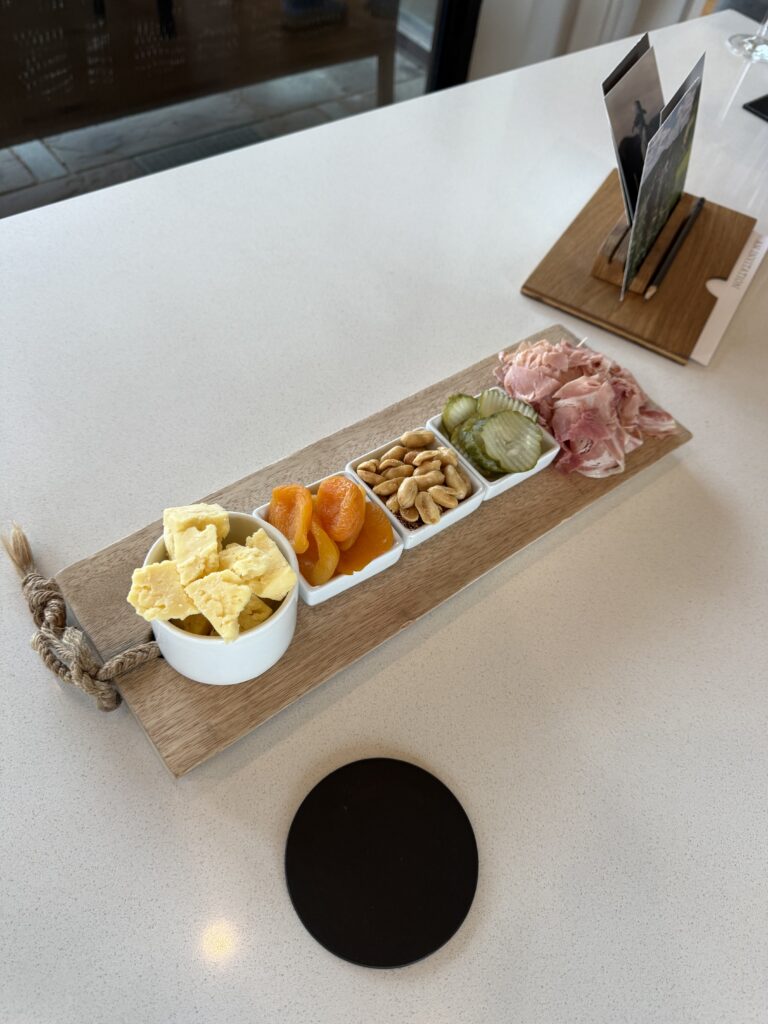
The snacks that accompany your tasting are locally sourced and well-chosen: cheddar biscuits, cheese from Middleburg, Virginia salted peanuts, dried apricots, locally made dill pickles, and ham from a nearby farm. They’re not an afterthought but a genuine pair with the wines, especially as you work through the richer, more structured bottles.
Service and Hospitality
My guide, Audrey, was everything you’d hope for in this kind of setting. She was knowledgeable, thorough, and clearly in love withwine. She answered every question I had, explained each detail of the winemaking process and made space for the whole group to share their own wine stories. The conversation moved naturally from the estate’s history to wine travel to the way wine has a way of bringing people together, and it never felt scripted.
Even on my first visit, the entire team made me feel like a returning guest. That’s a hard thing to manufacture, and Lost Mountain does it effortlessly.
Planning a Visit to Lost Mountain Vineyards
Best Time of Year
There’s honestly no bad time to visit Lost Mountain! It’s beautiful in every season. That said, spring and fall offer the best of both worlds: comfortable temperatures and access to the outdoor patio. Summer can be warm, and while winter visits have their charm (fewer guests, more intimate tours), you’ll be spending most of your time inside. Avoid harvest season if you want more relaxed attention from staff, as fall is one of the busiest times at any winery.
Getting To Lost Mountain Vineyards from Washington, DC
Lost Mountain is just over an hour from DC by car, making it an easy day trip. If you want to make a weekend of it, there are wonderful accommodations in the area, and a handful of other outstanding wineries worth pairing into an itinerary.
Other Wineries to Visit Nearby
Linden Vineyards is a twenty-minute drive away and well worth the stop. Josh Grainer, the winemaker at Lost Mountain, got his start there under Jim Law. He’s widely considered a pioneer of Virginia wine and a mentor to some of the state’s most respected producers. The wines at Linden are precise and delicious.
Glen Manor is another small producer in the area that punches well above its size. Bright, focused wines in an intimate setting. They limit parties to four guests and highly recommend reservations.
The town of Front Royal has a walkable main street worth exploring, including Front Royal Wines (a bottle shop) and Vinicola Wine Bar, both good stops to round out the day.
Is Lost Mountain Vineyards Worth Visiting?
For the right person, absolutely and enthusiastically.
If you love Bordeaux, or love talking about wine with people who’ve dedicated themselves to understanding it, you’ll feel right at home here. Even if Bordeaux-style wines aren’t your usual preference, the passion and depth of knowledge the staff brings to the experience makes it worthwhile. This is the kind of place wine lovers return to.
That said, it’s worth being honest about what Lost Mountain is not. It’s not a place to bring the whole family plus the dog for an afternoon. It’s not a drop-in spot. If you’re looking for that kind of casual, open-ended visit, save Lost Mountain for a day when you can give it the attention it deserves with a reservation in hand, no time pressure, and a designated driver sorted out in advance.
Tips for Making the Most of Your Visit to Lost Mountain Vineyards
A few things worth keeping in mind before you go:
First and most importantly: do not plan to drive yourself home after tasting. Ride-share options are limited in this area, so plan ahead with a designated driver. Or better yet, book accommodations nearby and make a night of it.
Skip the strong scents on tasting day. Perfume, heavily scented hair products, and laundry-fresh clothing can all interfere with your ability to fully appreciate the aromas in the glass. The same goes for lipstick, which can transfer flavor onto the glass and subtly affect your tasting experience.
And most practically: make your reservation before you show up. Without one, you won’t get past the gate.
To read more general tips on winery and vineyard visits, read my other blogs on the topic.
If you’re looking to plan a weekend in Northern Virginia wine country, or want help building a longer itinerary around Virginia’s wine regions, I’d love to help. Feel free to reach out and we can start putting something together.
Let’s Keep Exploring
Virginia wine country has a way of surprising people, and Lost Mountain is one of the reasons why. If this kind of experience speaks to you, I’d love to stay in touch.
Join my weekly newsletter for wine and travel inspiration, education, and the kind of insider knowledge that makes every trip more meaningful. From Virginia vineyards to the great wine regions of Europe, I share what I’m tasting, exploring, and recommending so you can travel with more intention and joy.
If a Virginia wine country weekend is already on your mind, I’d love to help you plan it. Whether you’re looking for a romantic getaway, a trip with friends, or a longer immersion into the region, reach out and let’s put something together.
If you’d like more information on Mistral Winds Travel, please visit my website. If you’d like to read other wine and travel blogs I’ve written, please visit my home on the web.
To follow along, join me on Instagram, Facebook, or LinkedIn.
Start Planning Your Virginia Wine Trip
Frequently Asked Questions About Lost Mountain Vineyards in Virginia
Yes, especially for wine lovers looking for a more refined Northern Virginia winery experience. Lost Mountain focuses on Bordeaux-style wines and offers a guided tour and seated tasting rather than a crowded tasting bar. The estate’s vineyard views of the Blue Ridge Mountains and its thoughtful hospitality make it one of the most memorable winery visits in Virginia wine country.
Yes. Reservations are required in advance. Lost Mountain is a private, gated property, so visitors cannot simply arrive without a booking. Reservations are made through Tock via the winery’s website.
A guided tour and tasting at Lost Mountain Vineyards costs $120 per person and includes a walk through the vineyard, cellar, and winery along with multiple wine tastings and light food pairings.
Lost Mountain focuses on Bordeaux-inspired red blends made from grapes such as Cabernet Sauvignon, Merlot, and Petit Verdot. The estate produces three wines: Friends & Family, Rendezvous, and the flagship Lost Mountain wine designed for long-term aging.
Lost Mountain Vineyards is located in Delaplane, Virginia in Fauquier County, about an hour from Washington, DC in Northern Virginia wine country near the Middleburg AVA area.

My clients receive comprehensive destination guides, but I believe great travel inspiration should be shared with everyone. Here you'll find insider tips from my travels, wine region discoveries, and destination highlights that might just inspire your next adventure. Whether you're planning a honeymoon, anniversary trip, or culinary escape, let's explore the world together!
Welcome To My
Home On The Web
A cool, dry wind that flows through France's Rhone Valley towards the Mediterranean Sea. It naturally ventilates vineyards, creating the perfect conditions for exceptional French wines and regional gastronomy.
What is a Mistral Wind?


